What is alley? Pronunciation and usage in English

alley means . Learn how to pronounce and use alley through vivid examples and easy-to-understand exercises.

Definition & pronunciation of alley

alleynoun

/ˈæli//ˈæli/
Definition & pronunciation of alley

Okay, let's break down how to pronounce "alley." It's a tricky one! Here's a breakdown:

The most common and accepted pronunciation is:

  • /ˈælɪ/ (AL-ih)

Let's break that down:

  • ˈæl - This is the stressed syllable. It sounds like "al" as in "alarm." The key is to say it clearly and deliberately.
  • ɪ - This is a short, quick "i" sound, like in the word “bit.”

Here's a more detailed guide, and some tips:

  1. Emphasis: The primary stress is on the first syllable ("al").

  2. Rhyme: It rhymes with "alley cat" or "alley rat.”

  3. Don't say "a-lee": Many people mistakenly lengthen the "a" sound. It's crucial to keep it short and punchy like the "i" in "bit."

Resources to hear it:

To help me give you even more targeted advice, could you tell me:

  • Where are you from? (Regional accents can sometimes influence pronunciation.)

Usage and examples with the word alley in English

Let's break down how to use the word "alley" in English. It's a word that can evoke strong imagery, often associated with a certain atmosphere.

1. Basic Definition:

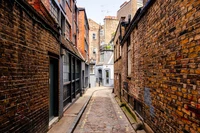
  • Alley: A narrow passage or street, typically between buildings, often short and not directly accessible from a main road. Think of a side street, but smaller and more enclosed.

2. Typical Associations & Connotations:

  • Dark and Mysterious: Alleys often have a reputation for being dark, shadowy, and potentially dangerous. This is why you see it used in crime fiction and thrillers.
  • Urban Environment: Alleys are most commonly found in older cities with dense buildings.
  • Small Businesses: They frequently house small, independent businesses like restaurants, bars, laundromats, or shops – often unique and quirky.

3. How to Use It in Sentences (with examples):

  • Describing a physical location:

    • "We turned down the alley to avoid the busy main street."
    • "The restaurant had a tiny table tucked away in a little alley."
    • "The graffiti artist painted his mural on the wall of the dark alley."
  • Suggesting atmosphere/mood:

    • "The alley was lit only by a flickering streetlamp, creating a spooky atmosphere." (Notice the evocative language)
    • "He nervously stepped into the alley, feeling a sense of unease."
    • "The alley echoed with the sounds of late-night conversations and music."
  • Figurative Use (less common, but possible): Sometimes "alley" can be used metaphorically to represent a hidden, less-than-savory corner of something, like a person’s life or a situation. Be cautious with this; it's not a common usage. Example: "His career took a dark turn, ending up in a professional alley."

4. Important Notes & Related Words:

  • Side Street vs. Alley: While often used interchangeably, "alley" implies a narrower, more enclosed space than "side street."
  • Dark Alley: This is a very common phrase and emphasizes the potentially dangerous or unsettling nature of the alley.
  • Alleys and Crime: Historically, alleys have been associated with crime due to their secluded nature. Be mindful of this association when using the word.

5. Let’s Practice!

Here are some prompts to help you practice using "alley":

  • Write a sentence describing an alleyway you’ve seen.
  • Write a sentence using "dark alley" to create a specific mood.
  • Describe a small business that might be located in an alley.

Do you want me to:

  • Give you more examples?
  • Focus on a specific way you’d like to use the word (e.g., in creative writing)?
  • Explain more about the history of alleys?

Idioms of the word alley

(right) up your alley
(North American English)very suitable for you because it is something that you know a lot about or are very interested in
  • A teaching job would be right up her alley.

Practice with vocabulary alley

Exercise 1: Fill in the blanks

  1. The delivery truck navigated the narrow _________ between the shops to reach the back entrance.
  2. We found a charming café hidden down a cobblestone _________, away from the bustling main street.
  3. The new office building features a spacious central _________ that connects all departments.
  4. Drivers should stay in their designated _________ to ensure smooth traffic flow on the highway.

Exercise 2: Choose the correct answer

  1. Which of the following best describes a typical "alley"? a) A wide, busy street b) A narrow passage between buildings c) A large open square d) A hidden shortcut

  2. You might find an "alley" in which of these locations? a) Between a supermarket and a residential complex b) On the top floor of an office tower c) Behind a row of restaurants for service access d) In the middle of a vast park

  3. If someone tells you to take the "alley," what are they likely suggesting? a) Drive quickly on the main road b) Use a less-trafficked route c) Follow a direct path through buildings d) Walk along a scenic riverbank

  4. Which term refers to a long passage inside a building, connecting rooms or offices? a) Alley b) Corridor c) Boulevard d) Lane

  5. Which of these words can describe a designated path for vehicles on a multi-lane road? a) Pathway b) Sidewalk c) Lane d) Esplanade


Exercise 3: Rewrite the sentences

  1. To reach the concert hall quickly, we took the narrow passage situated between the old theater and the new office block. (Rewrite the sentence, using "alley.")

  2. The restaurant managers instructed the delivery drivers to use the back service route for all food supply drop-offs. (Rewrite the sentence, using "alley.")

  3. The main thoroughfare of the city was bustling with vehicles and pedestrians during rush hour. (Rewrite the sentence, without using "alley," but using a suitable replacement for "thoroughfare.")


Answer:

Exercise 1: Fill in the blanks

  1. alley
  2. alley
  3. corridor
  4. lane

Exercise 2: Choose the correct answer

  1. b) A narrow passage between buildings, d) A hidden shortcut
  2. a) Between a supermarket and a residential complex, c) Behind a row of restaurants for service access
  3. b) Use a less-trafficked route, c) Follow a direct path through buildings
  4. b) Corridor
  5. c) Lane

Exercise 3: Rewrite the sentences

  1. To reach the concert hall quickly, we took the narrow alley situated between the old theater and the new office block.
  2. The restaurant managers instructed the delivery drivers to use the back service alley for all food supply drop-offs.
  3. The main avenue of the city was bustling with vehicles and pedestrians during rush hour.

Comment ()